Field symptom: visible separation during storage
Primary routing code: S / Stability. The code records the observed symptom; it does not assert a root cause or replace the thermal, chemical, or mechanical checks that may follow.
They are structured relationships between operating conditions, observable signals, critical unknowns, and the next validation decision.
Primary routing code: S / Stability. The code records the observed symptom; it does not assert a root cause or replace the thermal, chemical, or mechanical checks that may follow.
Primary routing code: T / Thermal. The next step is to compare the exposure window with the material tolerance.
Primary routing code: B / Biological. The next step is to identify the viability check needed across the intended shelf-life window.
Primary routing code: C / Chemical. The next step is to test the relevant interaction, oxidation, or compatibility condition.
Primary routing code: M / Mechanical. The next step is to compare shear, pressure, mixing, or filling conditions with the desired product structure.
A pattern becomes useful when it helps a team distinguish a repeatable operating risk from an isolated symptom, without pretending that limited evidence proves an outcome.
The material, process, storage, handling, or scale conditions that can move a system outside its intended operating boundary.
Observable indications such as separation, drift, loss of activity, processing instability, or an unresolved change-control gap.
The missing parameters that prevent a responsible conclusion and define what must be tested, measured, or verified next.
A bounded next action: hold, test, compare, verify, or redesign an interface before scale creates additional exposure.
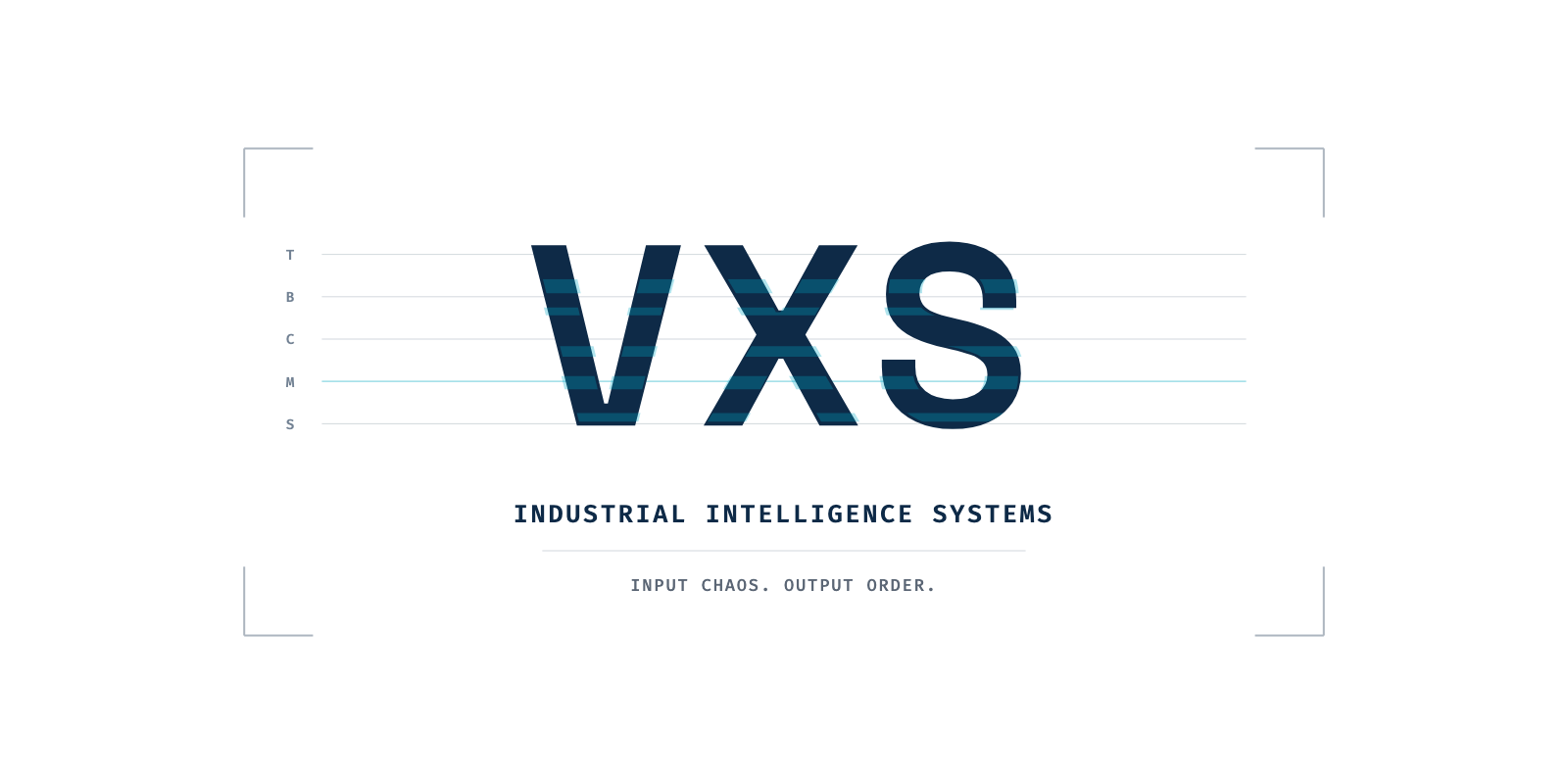
VXS uses T/B/C/M/S as a routing language, not as a claim that every risk can be diagnosed from a short submission.
Heat, cooling, and energy-transfer exposure.
Living systems, cultures, enzymes, and decay.
Interactions, oxidation, pH, additives, residues, and chemical contaminant boundaries.
Shear, pressure, mixing, and equipment stress.
Time, storage, separation, and transport exposure.
It does not establish product safety, regulatory compliance, laboratory performance, root cause, or a guaranteed scale-up outcome.
VXS publishes abstracted definitions and controlled methods. Client inputs, exact formulas, raw pattern records, and client-specific conclusions remain outside the public system.